

At some point, most people come to the same realisation:
I need better boundaries.
It might come after saying "yes" one too many times. Or feeling resentful towards people you care about. Or noticing that you’re constantly tired, stretched thin or quietly frustrated.
You know that something needs to change.
And yet…you don’t change it.
- You still say yes when you mean no.
- You over-explain.
- You replay conversations in your head afterwards, wishing you’d handled it differently.
So why does setting boundaries feel so hard, even when you know you need them?
Part of the answer is that boundaries aren’t just practical. They’re emotional.
On the surface, a boundary can look simple. Saying no. Asking for space. Being clear about what works for you and what doesn’t.
But underneath that moment sits a whole set of internal reactions.
- You might worry about disappointing someone.
- You might fear being seen as difficult or selfish.
- You might anticipate conflict, rejection or tension.
So instead, you soften it. Delay it. Or avoid it altogether.
This is where people often get stuck when thinking about how to set boundaries. They focus on what to say, rather than what it costs them to say it.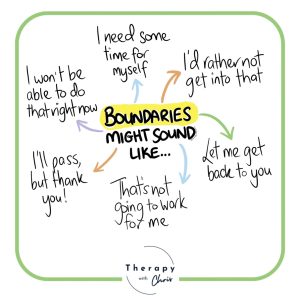
Because for many people, the difficulty setting boundaries isn’t about a lack of skill. It’s about what those boundaries represent.
If you’ve spent years being the reliable one, the easy-going one or the one who doesn’t make a fuss (yes, good old people pleasing), then setting a boundary can feel like stepping out of character.
It can feel like you’re risking how people see you.
For some, it goes even deeper than that.
If you grew up in environments where keeping the peace felt important or where other people’s emotions felt unpredictable, you may have learned - without realising - that it’s safer to adapt than to assert.
- That saying no leads to tension.
- That having needs might cause problems.
- That being agreeable keeps things steady.
Over time, that becomes automatic.
So when you try to set boundaries now, your system doesn’t read it as a simple behavioural change. It reads it as a potential threat.
That’s why even small boundaries can feel disproportionately uncomfortable.
You might notice it in your body before your thoughts catch up. A tightening in your chest, a knot in your stomach, a sudden urge to backtrack or soften what you’ve just said.
And because that discomfort feels so immediate, the quickest way to relieve it is to return to what’s familiar.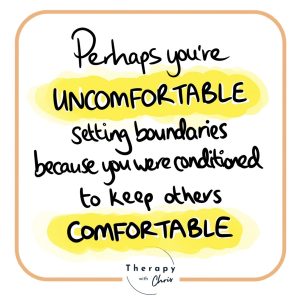
- To say yes.
- To smooth things over.
- To keep the peace.
Which works...in the short term.
But over time, the cost shows up elsewhere.
- Resentment builds.
- Energy drains.
- You feel less like yourself in your own life.
This is where setting boundaries without guilt becomes important. Not because the guilt disappears, but because you learn to tolerate it differently.
Guilt doesn’t always mean you’ve done something wrong. Sometimes it simply means you’ve done something different.
Something that prioritises your time, your energy or your needs in a way you’re not used to.
Learning how to set boundaries often starts here. Not with perfectly worded responses, yet with the willingness to sit with that discomfort without immediately fixing it.
- That might mean pausing before you respond instead of automatically agreeing.
- It might mean giving yourself time to check in with what you actually want.
- It might mean allowing someone to be briefly disappointed.
None of that is easy. But it is where change happens.
Because boundaries aren’t about pushing people away. They’re about staying connected to yourself while staying in relationship with others.
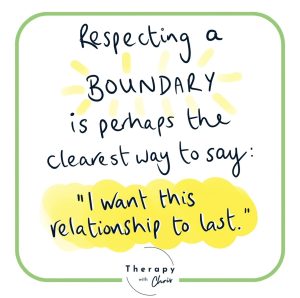
And that balance takes practice.
The more you begin to notice the moments where you override yourself, the more choice you start to create. Not overnight, and not perfectly, but gradually.
You might still feel uncomfortable. You might still question yourself. But you also begin to experience something else alongside that discomfort:
- A sense of alignment.
- A bit more space.
- A bit more honesty in how you show up.
If setting boundaries feels hard, there’s a reason for that. It’s not a personal failing. It’s a learned pattern, shaped over time.
And like any pattern, it can be unlearned.
Not by forcing yourself to be someone you’re not.
But by slowly expanding what feels possible.