

People pleasing is one of those behaviours that often gets misunderstood.
On the surface, it looks generous. Kind. Cooperative. Easy to be around. The person who swoops in, smooths things over and doesn’t make a fuss. The one who says yes before they’ve even checked-in with themself on whether they want to.
Yet beneath that surface, there’s often something much more complicated happening.
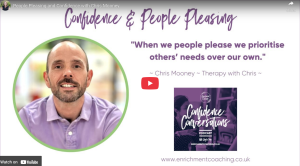
Recently, I had a conversation about people pleasing, with Gayle Tong from Enrichment Coaching, on her podcast 'Confidence Conversations'...what it is, why we do it and how to stop people pleasing without becoming hard, defensive or disconnected. What struck me again during our chat is how many people don’t even realise they’re doing it. It just feels like their personality.
“I’m just easy-going.”
“I don’t mind.”
“It’s not a big deal.”
Except sometimes it is a big deal. Just not to everyone else.
At its core, people pleasing is rarely about being nice. It’s about safety. It’s about belonging. It’s about managing other people’s reactions so that we don’t have to feel discomfort, rejection, conflict or guilt.
Most people pleasing patterns begin early. When we learn - consciously or not - that harmony keeps us safe. That approval earns connection. That being agreeable reduces tension. The nervous system gets very good at scanning for what others need, often before we’ve asked ourselves what we need.
Over time, that pattern can become automatic.
You might notice it in small moments: saying yes when you want to say no. Laughing something off that actually hurt. Offering help when you’re already stretched thin. Downplaying your preferences because "it's fine" or “it doesn’t matter”.
Individually, those moments don’t look dramatic. But over months and years, they add up. Resentment builds quietly. Exhaustion creeps in. You start to feel unseen, even though you’re constantly accommodating everyone else.
When people begin looking for ways on how to stop people pleasing, they often assume the answer is about becoming more assertive overnight. Learning the perfect way to communicate a boundary. Being firmer. Tougher.
That's good, though in my experience it's not where the real change starts.
If people pleasing is rooted in safety, then trying to rip it out abruptly can feel threatening. Your system might interpret boundaries as risk. Conflict as danger. Disapproval as loss.
So instead of asking, “How do I stop people pleasing immediately?”, a more helpful starting point can be, “What am I protecting myself from?”
Are you avoiding conflict?
Are you trying to prevent someone’s disappointment?
Are you managing how you’re being perceived?
When we understand why we people please, the behaviour makes more sense. It stops being a flaw and starts being a strategy — one that once served a purpose.
That doesn’t mean we have to keep it.
Breaking people pleasing habits often begins with awareness. Noticing the split-second tension before you automatically agree. Paying attention to the subtle resentment that follows. Observing how often your decisions are shaped by how someone else might feel.
Then comes something slightly uncomfortable: allowing small amounts of disapproval. Letting someone be mildly inconvenienced. Tolerating the pause after you say, “Actually, that doesn’t work for me.”
This is where people pleasing and boundaries intersect. Boundaries aren’t about pushing people away. They’re about staying connected to yourself while remaining in relationship with others.
And that balance takes practice.
One of the myths about learning how to stop people pleasing is that you’ll become selfish or uncaring. In reality, the opposite often happens. When you’re no longer constantly overriding yourself, your generosity becomes more genuine. Your yes means yes. Your help isn’t laced with quiet resentment.
You stop performing niceness and start choosing kindness.
Then there's your all-important nervous system to consider. When you’ve spent years tuning in to the needs of others rather than your own - scanning rooms, adjusting tone, anticipating reactions - turning that attention inward can feel unfamiliar. Even uncomfortable. But strengthening that internal awareness is key.
It might look like pausing before answering.
Checking in with your body when someone asks something of you.
Noticing whether your agreement feels expansive or constricting.
These are small shifts. But small shifts compound.
In the podcast, Gayle and I talked about how people pleasing doesn’t usually collapse relationships when you begin changing it. What tends to shift instead is the quality of those relationships. Some deepen. Some recalibrate. Occasionally, some fall away, and that can of course be confronting.
Yet the alternative is a slow erosion of self.
If any of this resonates, and you’ve found yourself wondering how to stop people pleasing without losing your warmth or values, I’d encourage you to listen to our full conversation. We explore the psychology behind the pattern, the role of early experiences and practical ways to begin untangling it gently, not dramatically.
You can watch or listen to the podcast below, or listen on Spotify or Apple Podcasts.
Connect with Gayle: https://www.enrichmentcoaching.co.uk/